What is a narcissist?
Narcissists are far more common than people think. After studying the subject for a long time, I believe they account for almost 50% of the population.
People hurt us at home, at work and in everyday life, and we do not understand why. Why so much cruelty? Take the test to find out whether you are dealing with narcissists!
What if you are living in TOXIC RELATIONSHIPS?
Your life WITH narcissists:
- They destroy your self-esteem with constant criticism
- They use emotional manipulation to isolate you
- You doubt your own mental health
- A toxic cycle of empty promises and repeated betrayal
- Their need for control turns every day into a battle for your independence
- You feel suffocated, you may be thinking about suicide, and you are alone
- You live in constant uncertainty and fear
What is life like WITHOUT narcissists?
- You feel truly free: nobody controls you
- You find peace, calm and tranquillity
- You finally feel more alive, and your energy is yours to use
- You no longer work for others: what you do belongs to you, and nobody takes it away
- Your relationships are more harmonious, full of love and joy
Are you experiencing narcissistic abuse?
Understand what they are putting you through – and WHY!






What is a narcissist? A definition
To understand the French term “pervers narcissique”, it helps to examine each word, define it and understand its meaning before putting them together.
First, “pervers” describes someone who displays perversity or destructive behaviour. In other words, a person who takes pleasure in doing harm or encouraging it.
“Narcissistic” refers to narcissism: an emotional fixation on oneself, self-admiration and self-contemplation. In short, a narcissist has an inflated image of themselves and builds themselves up by putting others down.
Characteristics of a narcissist – their personality profile
A narcissist can seem friendly, charming and sometimes reserved. Their charm and flattery appeal to the people around them. However, unease soon develops when you become closely involved with them. They have an intense need to be admired and present themselves as superior to others. They do not feel guilty when they hurt someone. They are skilled manipulators, and those closest to them become their victims.
The person affected by narcissistic abuse
The person affected remains trapped in the relationship. The narcissist sees themselves as innocent and accuses the other person of being in denial or exaggerating. They trap their victim using different forms of manipulation:
- They identify the other person’s vulnerabilities by listening carefully. They can then use that person’s doubts and fears against them.
- Despite recognising the other person’s vulnerabilities and low self-esteem, the narcissist initially idealises them. They compliment their appearance and repeatedly tell them they are a good person. Their aim is to gain the person’s complete trust.
- Once that trust has been gained, the narcissist begins criticising the other person’s appearance or personality. The other person feels foolish and does not question the abuser.
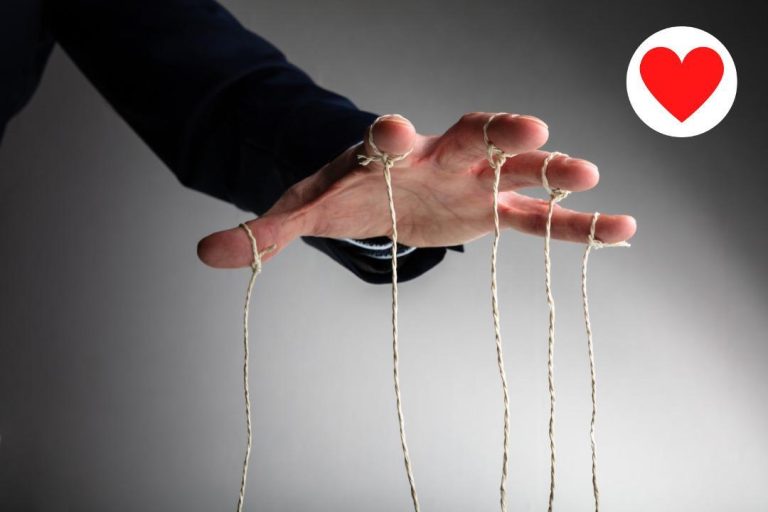
They remain the abuser’s puppet. The narcissist makes sure their game stays hidden and nobody notices.
Signs of narcissistic abuse – recognising a manipulator
There are several signs of narcissistic abuse that can reveal a manipulator’s behaviour. A narcissist:
- communicates unclearly with the people around them,
- often changes their opinion,
- lies,
- feels jealous,
- cannot admit mistakes or take responsibility for their actions,
- cannot understand other people’s feelings and needs,
- constantly seeks success or recognition,
- often shows two or more different faces,
- is never aware of the harm they cause.
A narcissist exerts a carefully calculated influence over others.
The narcissistically abusive man
Narcissistic abuse affects more men than women. Its signs in men vary:
- He wants to be superior to others and feels that he is,
- he displays grandiosity: an excessive desire for power, glory and success,
- he believes he is exceptional and only wants to associate with exceptional people,
- he constantly needs to inspire admiration,
- he feels entitled to special treatment and expects others to meet his demands,
- he tends to exploit others to achieve his aims,
- he is unable to show empathy.
The narcissistically abusive woman
Narcissistic abuse is not limited to men. Many women also display these behaviours in families, relationships, friendships and at work. Their methods and signs resemble those seen in men, although some subtle differences may appear:
- She is highly skilled at seduction,
- she needs to display her success,
- she uses sex as a means of control,
- she presents herself as fragile so that others will protect her.
How to recognise a narcissist – their behaviour
These behaviours can help you recognise a narcissist:
- They are a skilled manipulator,
- they show no empathy,
- they excel at seduction,
- they make the other person feel guilty,
- they are self-centred,
- they demand perfection from others,
- they spread falsehoods,
- they make strong sexual demands,
- they criticise and devalue others,
- they are paranoid.
Narcissistic abuse in a romantic relationship






How to overcome narcissistic abuse





Our latest articles
- Narcissistic replenishment: what it means and why a narcissist needs you
- Am I in a toxic relationship? A 15-sign self-assessment
- How to unsettle a narcissist: 7 tips
- A narcissistic son
- The narcissist and his son
- Is my husband a narcissist?
- Understanding Traumatic Amnesia: Effects and Implications
- The narcissist is watching you: the toxic control of the narcissist
- The IT Girl Paradigm: How Did This Phenomenon Come About?
- Perverse Narcissistic Teenager – How to Recognize Him?
Do not let them ISOLATE YOU
The first weapon a narcissist uses against you is isolation.
Take action first! Join us on social media so you never have to feel alone again and can find support.
Regain your confidence and peace of mind with our advice ❤️

Narcissists are also common in families






Narcissistic abuse test
To recognise narcissistically abusive traits in yourself, you can ask these questions:
- Do I lack empathy and remorse?
- Am I condescending and do I feel superior?
- Do I have high but fragile self-esteem?
- Do I intimidate and put others down?
- Do I seek constant attention and admiration?
- Am I unable to tolerate even mild criticism?
- Do I have an exaggerated sense of my own importance?
- Do I disregard other people’s boundaries?
- Am I very selfish and self-centred?
- Are my relationships superficial?
- Am I unable to accept others making decisions for me?
- Do I avoid taking responsibility for my own mistakes?
- Am I envious and do I believe others envy me?
- Do I take advantage of others without feeling shame or guilt?
- Do I feel better than other people?
- Do I overestimate my intellectual and physical superiority?
- Am I arrogant and hostile?
Narcissists and money
Narcissists and money go hand in hand. They use money to control others. Having a lot of it, or even a little, gives them a sense of dominance and power. Beyond enjoying money for its own sake, they love the feeling it gives them. In their view, money brings admiration, wellbeing, higher self-esteem, freedom, power and security.
A narcissist sees money as a vehicle that takes them to a destination. They believe it can buy friendship, love and happiness. In practice, however, they do not place much importance on these things. They simply want to feel appreciated and adored.
Narcissistic abuse at work – the abusive manager
Narcissistic abuse certainly exists at work. It is distressing to think that a manager may deliberately harm someone’s wellbeing and career. Behind their image as a leader, the manager’s only aim is to make the employee suffer. Here are some signs of this misconduct:
- The manager attacks the employee’s physical integrity,
- one employee is singled out for the manager’s relentless hostility,
- the manager undermines the employee’s professional credibility,
- the psychological harassment is justified by an ostensibly objective reason,
- the manager belittles the person in front of the team,
- the person is isolated,
- the manager prevents them from speaking up.
The narcissistically abusive father
A narcissist can be a family member, partner, colleague or friend. A parent can also display these behaviours. A narcissistically abusive father manipulates his children and needs to feel superior to them. To assert himself, he belittles them and damages the development of their self-esteem. He competes with his children and sees their successes as a threat. The children grow up feeling devalued and guilty and lacking confidence. Such a father shows these characteristics:
- He uses family ties to make others feel guilty,
- he is constantly talked about, even when absent,
- he questions his children’s abilities, personalities and qualities,
- he judges and devalues them,
- he criticises,
- he forces his family to do things they would not freely choose to do,
- he is jealous,
- he makes his family feel trapped,
- he lies,
- he denies obvious facts and cannot tolerate criticism,
- he presents himself as the victim to gain sympathy,
- he uses open blackmail or disguised threats,
- he is self-centred,
- he can break up a couple,
- he creates conflict,
- he divides people to control them more easily.
The narcissistically abusive mother
A narcissistically abusive mother is destructive towards her children, and this can affect their lives permanently. Such a mother may display many characteristics:
- She uses affectionate words to conceal her cruelty,
- she allows her children no independence,
- she favours the golden child and devalues the others, who become scapegoats,
- she only recognises her child’s success if she can take credit for it,
- in her view, her children are always wrong,
- she portrays her child as mentally unstable,
- she is jealous and wants to control everything,
- she invents false scenarios,
- she wants to be the centre of attention,
- she manipulates people and makes them unhappy,
- only her own needs, wishes and feelings matter,
- she cannot tolerate criticism,
- she spreads fear,
- she is petty and childish,
- she is shameless and aggressive,
- she exploits others,
- she projects her own mistakes onto her children,
- she never apologises or regrets her actions,
- she never recognises that others are suffering,
- she blames others for everything that goes wrong in her life,
- she ruins relationships,
- she presents herself as vulnerable or helpless when faced with the inevitable consequences of her harmful behaviour.
The narcissistically abusive child
A narcissistically abusive child makes life a constant nightmare for those around them, particularly their parents and siblings, who are the main people affected. A child developing these patterns may display the following behaviours:
- They cannot accept being told “no”,
- they whine,
- they insist on getting what they want,
- they get angry,
- they complain,
- they sulk,
- they like to present themselves as a victim of classmates and teachers,
- they manipulate their parents,
- they challenge the authority of their teachers,
- they flit from one interest to another,
- they refuse any request that does not suit their wishes.
Narcissistic abuse in a couple
Narcissistic abuse can occur within a couple. The narcissist may both charm and terrify their partner. Over time, you may see that they are dangerously calculating and exploit every opportunity. These signs may appear:
- When you first met your partner, it felt like love at first sight,
- they show pathological jealousy and are very possessive towards you,
- they devalue you despite the compliments they give you,
- you are always the one at fault,
- they lie and are often inconsistent,
- they frequently offer you financial help,
- they cannot tolerate criticism,
- they want to be the only person who cares about your happiness.
How can you live with a narcissist?
We have found these suggestions for living with a narcissist:
- Be realistic,
- listen to yourself,
- practise mindfulness,
- ask yourself the right questions,
- strengthen what is positive as well.
There may be other, more effective options, but these are the simplest.
How does someone become a narcissist?
Narcissistically abusive patterns can develop when we:
- have low self-esteem,
- are emotionally dependent,
- are unaware of this disorder,
- cannot conceive that this form of narcissistic abuse exists.
The narcissist and their mother
At a young age, the future narcissist is drawn to the parent of the opposite sex: the little boy is in love with his mother. Later, he is attracted to women who affect him in a similar way to his mother. He likes returning to his comfort zone: the arms of the mother who cared for him. He therefore looks for positive or negative personality traits or physical features that remind him of her. This can sometimes be healthy, or not healthy at all. The relationship between a narcissist and their mother can involve:
- Everything and its opposite,
- a relationship that is never balanced.
Here are some examples:
- Intense love / hatred and rejection,
- disinterest / wanting to save her,
- being overly involved,
- no boundaries and enmeshment,
- being ignored / being favoured,
- being controlled,
- admiration and a need for affection,
- over-involvement,
- criticism / idealisation,
- a seductive, almost sexualised relationship,
- competition,
- wanting to remain number one in her life,
- seeking approval to be loved.
Can a narcissist change?
A narcissist can change if they become aware of their behaviour and begin working on themselves. Different forms of psychotherapy can help them express their distress:
- Family therapy : several discussion sessions explore communication problems and conflicts to address difficulties in relationships,
- group therapy : the person meets others with similar problems and works on improving their relationships,
- individual therapy : this can last several years. Therapy restructures the personality and helps rebuild a realistic, positive self-image.
It is important to make clear that there is no medication for narcissistic abuse itself. However, medication for anxiety or antidepressants may help when symptoms of depression are present.
Leaving a narcissist – breakup and divorce
Leaving a narcissist can offer a way out of exhaustion and lost confidence. In a romantic relationship, there is still hope for a harmonious, healthy life. It is urgently important to inform the people around you. Legal help may be necessary, as narcissists can be skilled at defamation. Friends may also be able to support the person affected. Consulting a psychotherapist is recommended too.
How can you forget a narcissist?
To move on from a narcissist, you can follow these suggestions:
- Rest,
- return to a social life,
- exercise or do an activity you enjoy,
- reconnect with your loved ones and friends.
Get to know YOURSELF to heal
If narcissists and toxic people surround you or influence your life, it is because of you!
Or rather, it is because you did not have the chance as a child to learn how to identify manipulators who do not have your best interests at heart.
To heal from the suffering you have experienced and avoid finding yourself in this situation again, learn about yourself and the psychological biases manipulators exploit – so you NEVER HAVE TO SUFFER AGAIN!